
Services
Resources
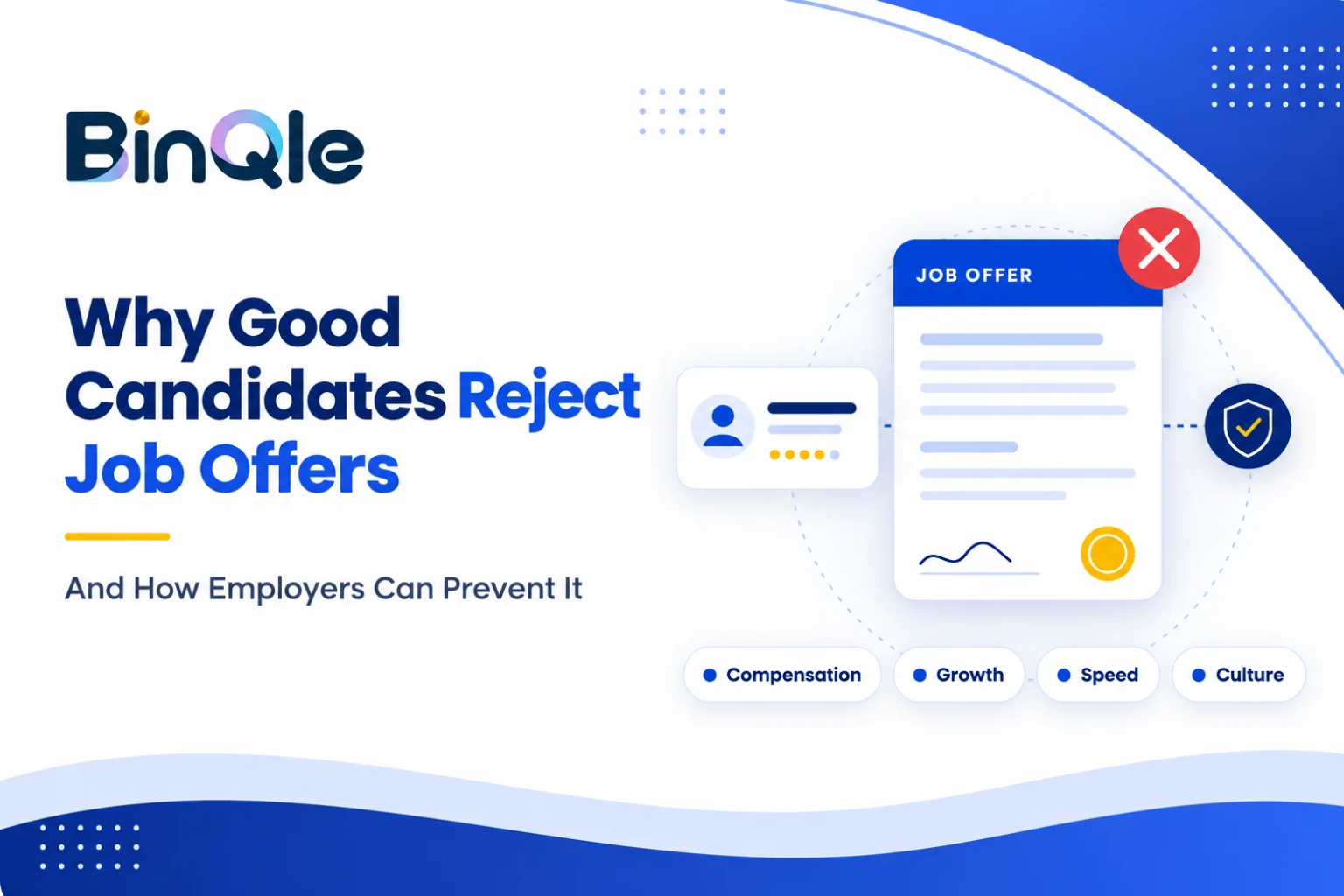
Good candidates reject job offers when the opportunity does not meet their expectations on compensation, responsibilities, working arrangements or career progression. Some concerns become clear during interviews. Others emerge when the candidate reviews the written offer or discusses resignation with their current employer.
For enterprises and GCCs hiring in India, improving offer acceptance requires more than a final salary negotiation. Recruitment teams need to understand the candidate’s priorities early, provide consistent information and manage the period between selection and joining.
It also helps to distinguish between an offer declined and an accepted offer that does not result in joining. The first may indicate an unattractive proposition. The second may involve a counteroffer, unresolved concerns or difficulties completing the move. Each needs a different response.
A higher CTC does not always mean a better financial offer. Candidates compare fixed pay, variable pay, benefits and the conditions attached to bonuses.
For example, a candidate moving from ₹20 lakh to ₹24 lakh CTC may reconsider if much of the increase depends on performance-linked payments. A joining bonus may improve first-year earnings without providing the recurring increase they expected.
Before preparing the offer:
Employers should also benchmark the role against comparable responsibilities and skills. Applying a standard percentage increase to a candidate’s existing salary can produce an offer that falls below the market.
Aon’s recruitment compensation framework identifies market competitiveness, internal pay parity, consistent criteria and offer governance as key considerations. A structured approach helps employers make competitive offers while managing internal equity.
A candidate may be qualified for a position without having a strong reason to accept it.
Someone seeking hands-on engineering experience may decline a role dominated by coordination. A professional looking for management responsibility may hesitate if the proposed position has no direct reports or defined decision-making authority.
Recruiters should establish the candidate’s main reasons for changing jobs and identify which expectations are essential. The hiring manager can then explain how the role meets those priorities, using specific responsibilities and examples.
For GCC positions, clarify the India team’s responsibilities, its relationship with global teams and the decisions the employee can make locally. Replace broad promises about “global exposure” with an explanation of the projects, stakeholders and responsibilities involved.
At BinQle, candidate evaluation includes motivation and career direction alongside technical suitability. Mapping expectations before submission helps identify concerns that might otherwise appear at the offer stage.

Work location, office attendance and working hours can determine whether a candidate accepts. These details should be confirmed before several interview rounds have taken place.
A 2025 India report, based on 750 respondents in India, found that 60% would not accept a job without flexibility in working hours. A further 56% said they would decline an offer without flexibility in work location. These findings describe stated preferences, rather than actual rejection rates, but demonstrate the importance of discussing working arrangements.
Be specific about:
If attendance is mandatory, explain it clearly. An arrangement that suits one candidate may be unsuitable for another. Early disclosure allows both sides to assess that fit.
For contract roles, also confirm the employing entity, assignment duration, benefits and payroll arrangements. Any possibility of permanent employment should be described accurately, without implying a guaranteed conversion.
A lengthy process gives candidates more time to progress with other employers. Repeated interviews and missed updates can also make it difficult to assess whether the organisation is ready to hire.
Before recruitment begins, agree on interview stages, assessment criteria and decision-makers. Confirm headcount and compensation approvals early enough to avoid an extended wait after selection.
Each interview should have a defined purpose. Technical assessment, managerial evaluation and compensation discussions should contribute different information.
Set internal deadlines for interview feedback and offer approvals. If the process is delayed, update the candidate with a realistic next step. Avoid repeatedly promising an offer “soon” when the approval date remains uncertain.
Candidates may be considering other roles or may receive a counteroffer after resigning. Employers should discuss this possibility before assuming that acceptance will lead to joining.
Invite candidates to share their decision timelines and the factors influencing their choice. They do not need to disclose another employer’s confidential offer documents for the conversation to be useful.
If a competing offer emerges, establish the deciding factor. A compensation revision may help when fixed pay is the concern. It may have little effect when the candidate prefers another manager, location or type of work.
Any revised offer should remain consistent with the role’s value and internal pay structure. Give candidates reasonable time to review the written terms and resolve outstanding questions before committing.
After acceptance, candidates may still need to secure release, arrange relocation or resolve questions about their new role. A signed offer does not complete these steps.
Assign a contact for the notice period and agree on a useful check-in schedule. Confirm the expected release date, provide joining instructions and arrange a conversation with the future manager where needed.
Focus communication on practical progress. Repeated requests to confirm commitment are less useful than resolving a delayed release or explaining the onboarding process.
BinQle’s approach includes accountability through to Day 1. This keeps attention on successful joining alongside candidate selection and offer acceptance.
Record why candidates decline, when the concern became known and whether it could have been addressed earlier. Review results by role, location and hiring team.
Repeated salary-related rejections may require revised budgets. Withdrawals over office attendance suggest that working arrangements need earlier discussion. Losses during approval delays point to an internal process issue.
BinQle supports enterprises and GCCs across India with permanent hiring, contract staffing, RPO and payroll. If offer rejections are delaying your recruitment plans, discuss your hiring requirements with our team.
Yes, if their skills remain relevant and circumstances have changed. Discuss the earlier reason for declining before restarting recruitment.
Offer a short, optional conversation or written feedback form. Keep the discussion neutral so candidates can explain their decision without pressure to reconsider.
Yes. Communicate their status honestly and ask permission to stay in touch. Avoid suggesting an offer is confirmed when a decision is still pending.
No. Results vary by role, location and talent availability. Track your own trends using consistent definitions, and review acceptance and joining rates separately.
Every hiring manager in every industry wants the same thing. The right person, in the right role, who joins when they say they will and stays long enough to make an actual difference.
That outcome has been treated as aspirational for long enough. The 44 day average time to hire is not a law of nature. The 46% failure rate at 18 months is not an industry inevitability. The four month search and eight offers Arjun went through to fill one role the story this piece opened with is not the standard that enterprise hiring has to accept.
AI powered hiring solutions make a different standard achievable. Not in theory. In practice, for the organisations already running on them, with data that shows the difference across a full year of hiring.
BinQle is built around one outcome. The right person. Properly assessed. Walked through to Day 1.
Visit binqle.com to see what that looks like for your team.